
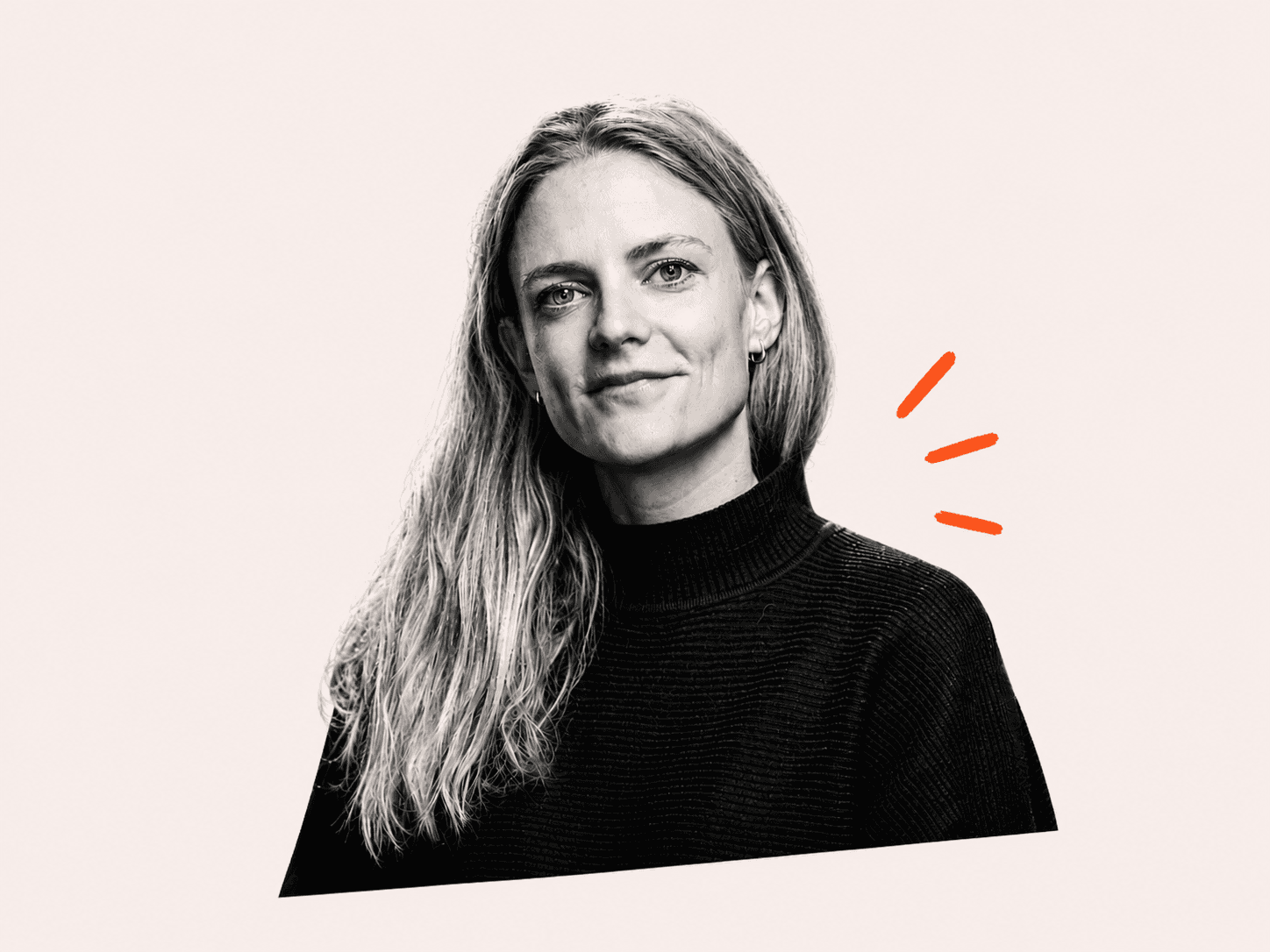
Céline Goole
•
Last week, I published a LinkedIn post in which I was fairly critical of vibe coding.
My point was simple: A few prompts in Lovable or Replit do not magically create a solid software product. They won't give you a scalable architecture, a thoughtful user experience, a robust codebase, or a successful product. But at the same time, I wanted to find out where vibe coding does make sense.
Because if it's not the right way to build long-term software products, then what is it good at? Rather than debating the question any further, I decided to run an experiment.
Instead of finishing the blog I was writing, I gave myself one challenge: Use vibe coding to take an idea from concept to launch as quickly as possible, and see where it excels and where it falls short.
The experiment
That same day, another heatwave was announced.
The headlines were predictable: elderly people and vulnerable groups would be at greater risk, hospitals were preparing for increased admissions, ambulances would be busier than usual... At the same time, I saw a few local initiatives pop up on my social feed. People wanted to help. So I wondered: what if we could bring those small efforts together and make it easier for citizens, businesses and local organisations to join forces?
People might have a swimming pool, a cool garden, an air-conditioned office, a fan,… Or simply the motivation to support vulnerable people with doing groceries.
The problem isn't the lack of resources. The problem is that people don't know who needs them. That felt like the perfect experiment. I wanted to discover how far vibe coding can take you when your goal isn't to build a polished software product, but to launch an idea into the real world. And see where it would potentially fall short.
One day
In a single day I:
Came up with the concept
Refined its key flows & functionalities sparring with ChatGPT
Defined the branding & storyline
Built a working platform using Lovable
Published the landing page
Wrote a press release
Reached out to the media
And ended up being interviewed by regional television that same evening.
CoolTogether was born. The platform itself was far from perfect, but it got the job done. This experiment was never about building a polished software product. It was about seeing how quickly an idea could go from concept to reality when AI removes so much of the friction around building.
In this case, speed mattered more than technical perfection. The goal wasn't to create a scalable platform that would still be around in 6 months. The goal was to launch a relevant initiative while the heatwave was actually happening, and see whether it could spark a social movement.
What AI did
AI helped me build a first working version incredibly fast. What would previously have taken days or even weeks was now online within hours.
More importantly, it reduced the cost of experimentation to almost zero.
As a Product & Marketing Designer, that's a far more interesting conversation than whether AI will replace software engineers. If building something no longer takes weeks, you stop debating ideas endlessly. You build them, launch them, and learn from the real world.
As long as we're talking about experiments, campaigns, prototypes or making ideas tangible, AI is phenomenal.
What AI didn't do
The experiment also reinforced why vibe coding isn't a replacement for product development. Getting something online is one thing. Building a product that people actually adopt, trust and continue using is something entirely different.
CoolTogether wasn't based on weeks of user research or interviews. It hadn't been validated with potential users. I didn't know whether people would actually be willing to open up their garden, lend out a fan or invite strangers into their home. Those were all assumptions.
From a technical perspective, the platform hadn't been stress-tested either. There was no scalability strategy, no security audit, no extensive testing, no long-term architecture and no iterative refinement based on user feedback.
And that's exactly the point. For a one-day experiment, those risks were perfectly acceptable. For a product you want to build a business around, they're not. That's also what worried me most when I wrote my previous post about vibe coding. AI can remove much of the effort required to build something, but it doesn't remove the uncertainty of whether you're building the right thing.
A working prototype is not evidence of product-market fit
A generated codebase is not a validated business
A beautiful interface is not proof that people will use it.
Those are the questions that product discovery, user research, UX design and iterative product development are meant to answer.
And that's exactly where experienced product teams still create the most value.
Conclusion
This experiment didn't change my opinion about vibe coding.
It actually refined it. My biggest concern was never whether AI could generate code. It was whether it would make us believe that building software had suddenly become easy. Well… It hasn't.
AI dramatically lowers the cost of experimenting or building. But it doesn't reduce the uncertainty of innovation.
It doesn't tell you whether you're solving a real problem
It doesn't validate your assumptions
It doesn't tell you whether people will adopt your product, trust it or come back to use it tomorrow
And it certainly doesn't reduce the uncertainty of building a successful product.
Those are still the hardest, and most valuable parts of product development. What AI does change is the cost of testing ideas.
Instead of spending weeks building something just to make your idea tangible and validate it, you can now launch an experiment in a day and learn from real users while the idea is still relevant. That's exactly what happened with CoolTogether.
It wasn't built to become the next unicorn. It was built to answer a simple question: "Can a small idea make a difference if you can launch it today instead of next month?"
And maybe that's where vibe coding shines brightest. Not as a replacement for product development. But as the fastest path from an idea to a real-world experiment.
Schedule a meeting
or reach out

Book a 30 min
Introduction Meeting
info@hatch.be
+32 471 07 74 16
Interleuvenlaan 15A
3001 Leuven (Belgium)
A few prompts in Lovable or Replit do not magically create a solid software product. They won't give you a scalable architecture, a thoughtful user experience, a robust codebase, or a successful product.

The place of bespoke software in 2025 In an era where cloud-services, low-code platforms and AI-powered tools dominate conversation, one might ask: is there still a place for bespoke software? The short answer: yes